
Implant Dentistry
A permanent answer to a missing tooth.
Dental implants replace missing teeth at the root — giving you a replacement that looks, feels, and functions like the tooth it's replacing. We coordinate the full process from evaluation through the final implant crown restoration.
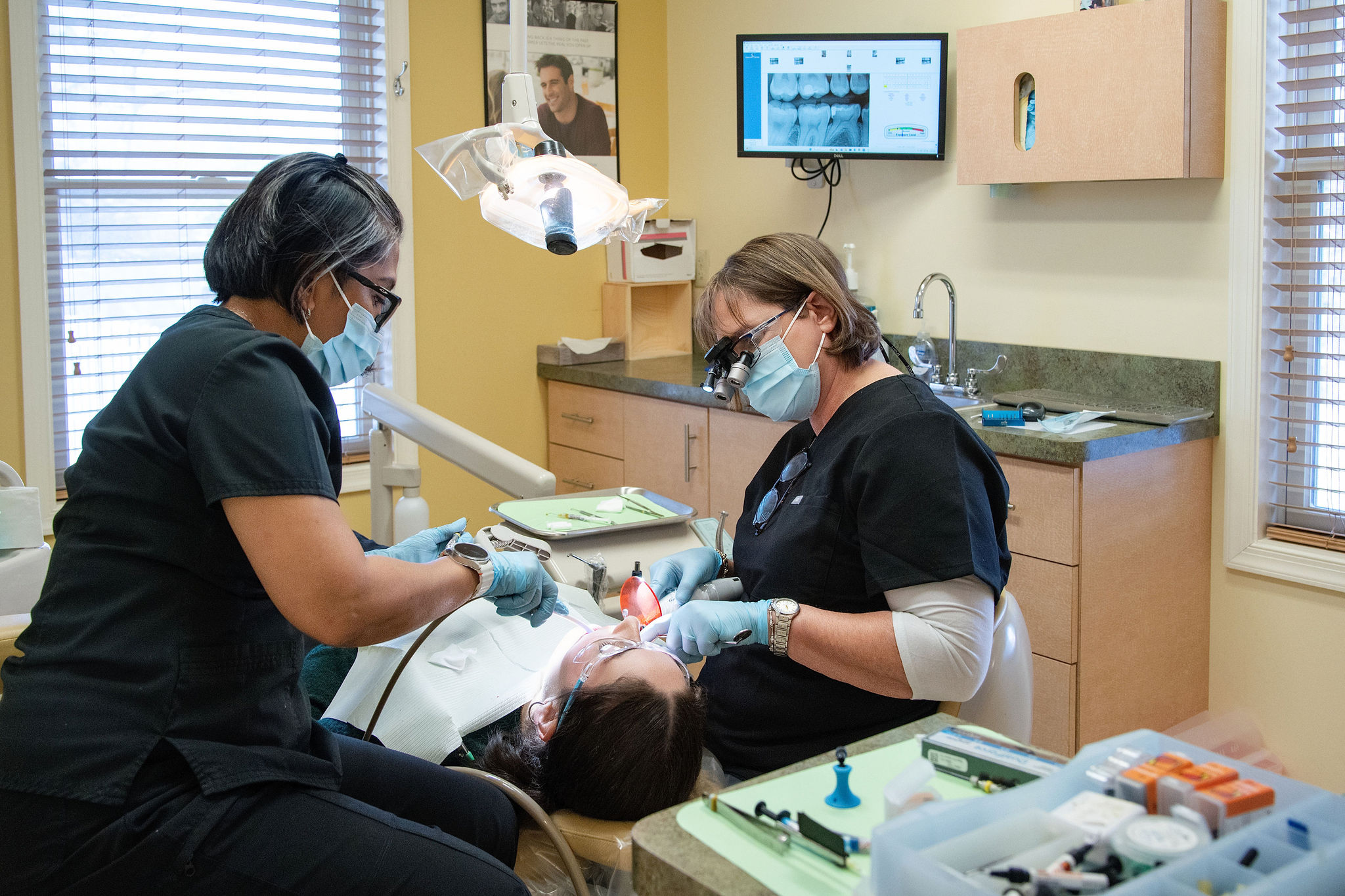
What a dental implant is
A dental implant is a small titanium post — roughly the size and shape of a natural tooth root — that is placed into the jawbone where a tooth is missing. Over a few months, the bone fuses with the post in a process called osseointegration. Once integrated, the implant acts as a permanent anchor for a crown, bridge, or denture that looks and functions like a natural tooth.
Implants are widely considered the gold standard for replacing missing teeth. Unlike a traditional bridge, they don't require preparation of neighboring healthy teeth. Unlike a denture, they don't slip, click, or need to be removed at night. And because they replace the root as well as the crown, they preserve the jawbone — which tends to shrink when a tooth is missing for long.
Who dental implants are for
- Anyone missing a single tooth, several teeth, or all their teeth
- Patients who want a permanent replacement rather than a removable appliance
- Patients with a failing or broken tooth that can't be saved
- Long-time denture wearers who are frustrated with fit, function, or confidence
- Patients whose bite or chewing has become difficult because of missing teeth
To be a candidate for implants you generally need healthy gums and sufficient bone to support the implant. If bone has been lost (from long-missing teeth or gum disease), bone grafting may be an option to build back the foundation. Dr. Kreitman will evaluate your specific situation and walk you through what's realistic.
The implant process, step by step
- Consultation & planning. We review your medical and dental history, examine the area, and use digital x-rays (and, when needed, 3D imaging from a partnered specialist) to plan the ideal implant position. You'll leave the consult knowing the plan, timeline, and cost.
- Extraction (if needed). If a failing tooth needs to come out, that's step one. In some cases an implant can be placed the same day; in others, the site is allowed to heal first.
- Implant placement. A minor surgical procedure, typically performed under local anesthesia. Most patients are surprised by how uneventful it is — similar recovery to a tooth extraction.
- Healing & integration. Over 3–6 months, the bone fuses around the implant. During this time you'll wear a temporary restoration if the implant is in a visible spot.
- Abutment & crown. Once the implant is fully integrated, we place a small connector (the abutment) and then your final custom crown — matched precisely to the color, shape, and translucency of your surrounding teeth.
- Long-term care. An implant is cared for much like a natural tooth — brushing, flossing, regular cleanings. With good care, implants routinely last decades.
Beyond single implants
Implant-supported bridges
For several adjacent missing teeth, two implants can support a fixed bridge — restoring three or four teeth without needing an implant for every single one.
All-on-four / implant-supported dentures
For patients missing all their teeth in an arch, an implant-supported denture uses a small number of implants to anchor a full arch of replacement teeth — dramatically improving stability compared to conventional dentures. If this is something you want to explore, we'll discuss it at consultation and coordinate with specialist partners as needed.
Frequently asked questions
How long does the whole process take?
Most single-tooth implants span 4–8 months from start to final crown, with most of that time being the bone-healing phase (you're not in the chair — you're just waiting). More complex cases involving extractions, bone grafting, or multiple implants may take longer.
Is it painful?
The placement procedure itself is done under local anesthesia and most patients report minimal discomfort. Recovery usually involves a day or two of mild soreness, managed with over-the-counter pain relievers. Most patients say it was easier than they expected.
How long do implants last?
With proper care, dental implants can last 25+ years — often a lifetime. The crown attached to the implant may need replacement after 15+ years of wear, similar to a natural crown, but the implant itself is designed to be permanent.
Does insurance cover implants?
Coverage varies widely. Most dental insurance plans cover at least a portion of implant treatment, particularly the crown; some now cover the implant placement as well. Medical insurance may cover certain cases (e.g., tooth loss from accident). We'll verify your specific coverage and provide a clear cost breakdown before any work begins.
Are there alternatives to implants?
Yes — traditional bridges (supported by neighboring teeth) and removable partial dentures remain valid options. At consultation, we'll walk you through the trade-offs of each so you can make the choice that's right for you, not just the most expensive one.
Get in touch
Let's meet you and your smile.
Whether it's your first visit or your fiftieth, we'd love to welcome you. Call the office or send a note — we'll take it from there.